
I tried to make eye contact with my friends who were talking, but no one looked into my eyes. I just wanted to catch up with my classmates, but they seemed like they didn’t want to talk with me. I soon stepped back and left the conversation. I went home with a feeling that I could not name, but I was sure that I felt unseen.
I would start speaking, then immediately felt that nobody was interested: they always interrupted me or changed the subject. I asked myself: Was my pronunciation or my English bad? I felt unheard.
In my first several months at the university, I could barely hear my own voice when I was in the apartment with my roommates. I rarely spoke or finished a sentence without being interrupted on my campus. I felt so shy, and sometimes, I did not want to talk with my new friends, doubting my English speaking skills. From some people’s perspective, I became a “quiet Asian girl”.
Upon research, it soon became clear that what I was experiencing was loneliness, and that this experience was common amongst my peers. The transition from school to university, or from moving from one country to another to study, is associated with changes in many aspects, which leads to students experiencing a lack of sense of belonging and difficulty in integrating a new environment. This is not a new topic on campuses around the world, especially in English-speaking countries such as Australia, the US and the UK, when lacking a sense of belonging leads to loneliness among students. It happens when the perception of social needs in both quantity and quality are not fulfilled, which can be measured by different loneliness scales.
Every year, Europe welcomes more foreign or international students to study. The majority of students were graduates from master’s degree courses (56.4 per cent). In Ireland, the 2023/24 academic year witnessed a new high record of the number of both EU and non-EU international students: more than 35,000 students. Graduate programmes are also a popular choice for international students, growing roughly equally with undergraduate enrolment. I am one of these graduate students, coming from Asia.
In 2019, the Union of Students in Ireland conducted a significant mental health survey with third-level students where they found that only 11.6% of surveyed students did not feel lonely at all, while the remainder (88.4%) experienced loneliness somewhere between always and occasionally, with the majority of students stating that developing personal relationships is not easy for them. A student at the National College of Ireland, Leah Ward (2022) conducted research where some participants used “superficial relationships” or “at surface level” to describe the connections they have on the campus. This loneliness seems to be a paradox when we all live in a social media world where humans are connected just by a click or a touch of their screen.
Engaging with another student in an intercultural communication context is considered one of the most challenging social elements for students, causing the missing link in building meaningful and positive interactions in both in and out of the classroom. In 2019, research indicated a growing need for intercultural communication courses in higher education as a necessary course for students to learn how to communicate in a healthy, tolerant, and respectful manner with other students who come from various cultural backgrounds. As Irish campuses now welcome more multicultural students every year, is this the time for third-level education institutions to think about how they can support students to communicate better and build more meaningful and positive relationships? Some countries have been working on fostering connections on campus; for example, Australian campuses have started to provide support and prepare students to consider diverse contexts and communicate with each other better.
I started to use one of the tools I learned several years ago: non-violent or compassionate communication (NVC). Understanding my feelings and my needs changed my perspective. Here is what I wrote down at the time:
“My needs are to be connected, accepted, and communicated with on campus. The need to belong is the most important need for me. At first, most of these needs were not fulfilled on my campus. I felt lonely, sad and nervous. However, instead of assuming the worst, I tried to imagine the other students’ feelings: They may feel the same. Maybe I am the first Vietnamese girl they ever met. Maybe they also don’t know “how” to communicate with me. Maybe my English accent is strong and they find it hard to understand my voice. Maybe they have enough friends and they don’t think they need more. Maybe they have a bad first impression of me. When I switched to that perspective, I felt much better.”
By the end of my second semester, I ended up with a good circle of friends on campus. It was hard to overcome the challenge, but I am happy as I slowed down, reflected and became more self-compassionate. A true and supportive relationship takes time to grow as we sow seeds and wait for a first leaf. Now, I can confidently say: “I am not alone”.
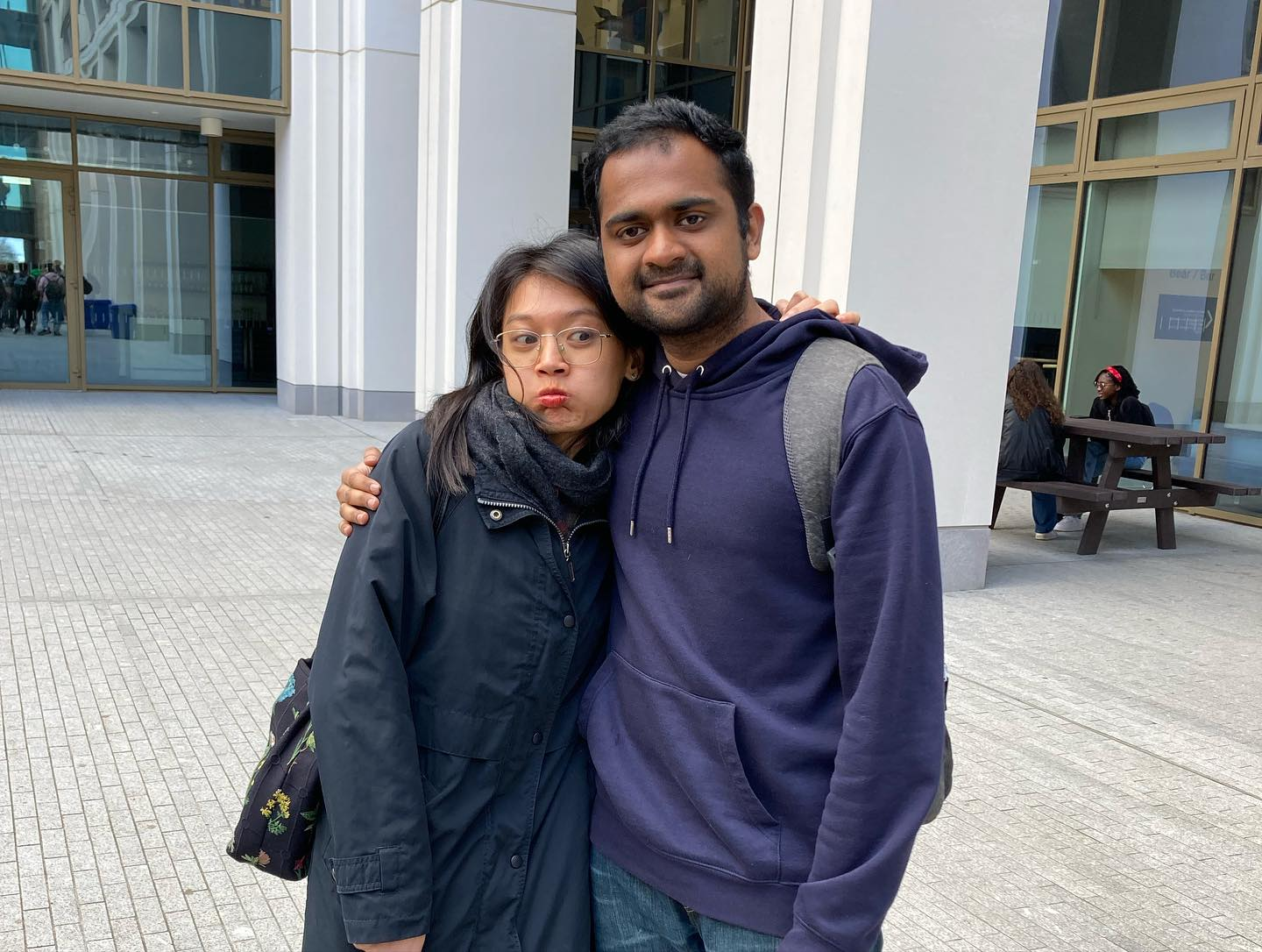
If you are feeling lonely, let’s…
Talk about loneliness.
Use external support networking in Ireland to build meaningful connections. In Ireland, universities and social organizations are making efforts to listen to students’ voices and catalyse action to improve mental health. Students can find both internal and external campus resources to overcome loneliness.
Notice unkind self-thoughts and practice self-compassion.
Finally, practice curiosity for yourself and others, and connect honestly and gently. Don’t let first-impression bias and confirmation stop you from creating true and beautiful friendships and other connections.
Posted on STAND: https://stand.ie/stand-newsroom/self-compassion-helps-us-overcome-loneliness-personal-account-loneliness-campus-0
Final note*
From a girl felt lonely in classroom to a nominated individual in Class Rep Award. I would say that what we do from our heart, it will return to us in such an unexpected way.
“I was surprised when I saw my name as Winner Class Rep Awards 2024 Prize – Faculty of Arts and Humanities in Technological University Dublin by TU Dublin Students’ Union
This moment made me think about how they did it, and what my peer classmates wrote about me. I wish I could read your thoughts. When Patrick gave me a tight hug and said “Thank you for being a good friend” on the last examination day, I believe that it is the most memorable thing my classmates recall about me.”
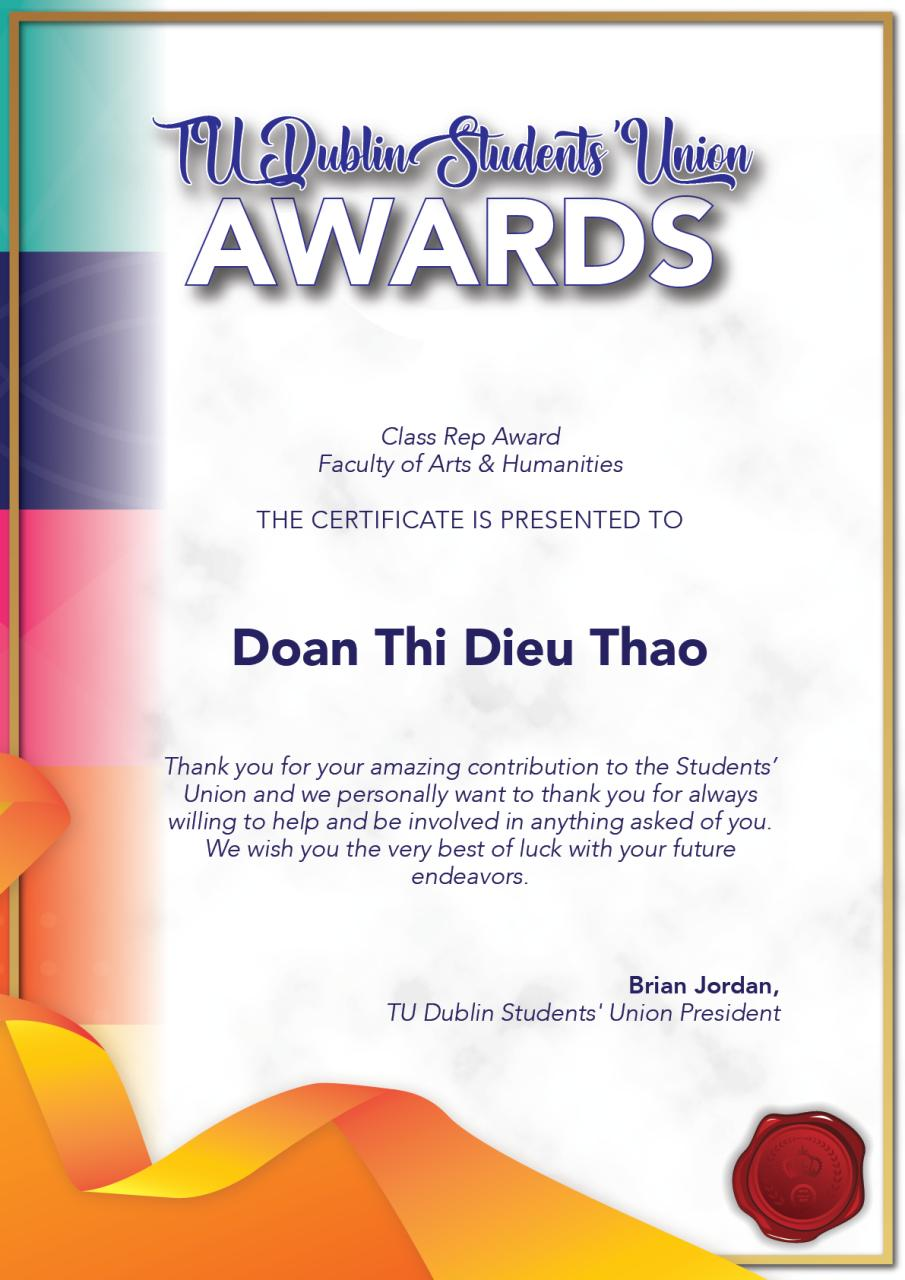
TU Dublin Students’ Union Awards – Winner Class Rep Awards 2024
 selena sprout
Leave a comment